
The 5th Huairou Forum
On August 19, the 5th "Huairou Forum" officially commenced at the Multimodal Trans-Scale Biomedical Imaging Facility in Huairou Science City, Beijing. The forum focuses on the frontier field of pan-digital life, bringing together leading scholars from around the world in biomedical imaging, omics, and computational biology to jointly explore new pathways for building next-generation verifiable life models, and to facilitate innovative breakthroughs across the entire chain of life science research and clinical translation.
Themed "Toward Pan-Digital Life — Multimodal Imaging, Omics, and Verifiable Life Models," this year's forum is jointly hosted by Peking University, NEJM Frontiers in Medicine, the Institute of Biophysics of the Chinese Academy of Sciences, and the Biomedical Imaging Branch of the Biophysical Society of China. It is co-organized by Beijing Zhongguancun International Exhibition Operation Management Co., Ltd., the Beijing Laboratory for Biomedical Imaging, and the Global Healthcare Industry Center of emlyon business school. The event is undertaken by the National Biomedical Imaging Science Center of Peking University, the International Research Center for Pan-Digital Life, and the College of Future Technology.
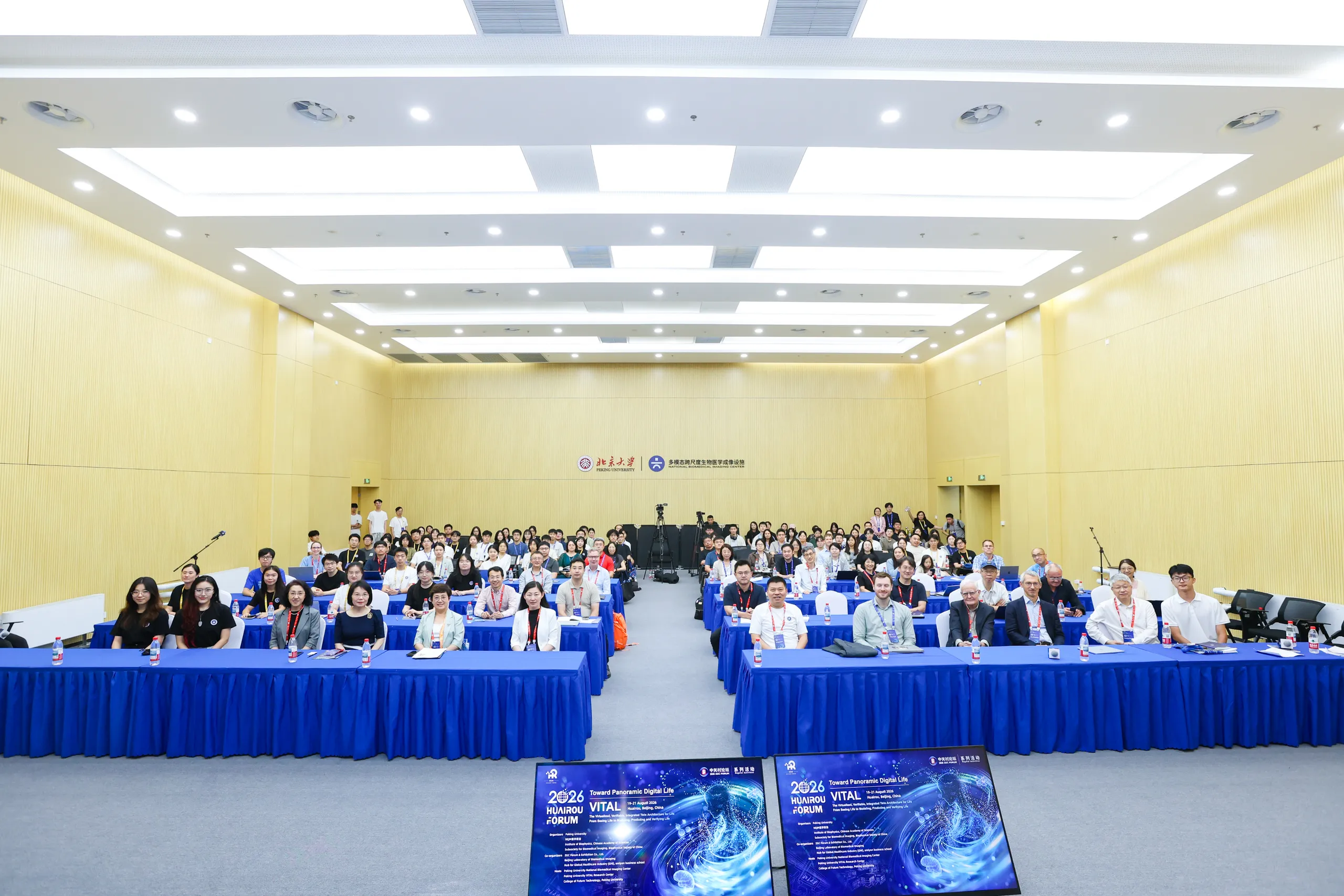
The opening ceremony was moderated by Professor Chen Liangyi, Director of the National Biomedical Imaging Science Center of Peking University. He provided a systematic overview of the overall vision and implementation roadmap of the International Big Science Program for Pan-Digital Life (VITAL), specifying multimodal multi-scale imaging, spatial omics, and verifiable computational models as its three core pillars for building a predictable and verifiable digital life research system. He also called on research, medical, and industrial institutions worldwide to deepen open collaboration, unify data standards, improve verification frameworks, and jointly build and share platforms, so as to accelerate the implementation of the VITAL program and lay a solid research foundation for the advancement of precision medicine and the cause of public health.
The forum brings together a distinguished gathering of academicians and experts from China and abroad. Attendees include Qiao Jie, Director of the Peking University Health Science Center and Academician of the Chinese Academy of Engineering; Xie Xiaoliang, Director of the Changping Laboratory and Academician of the Chinese Academy of Sciences; Cheng Heping, Chief Scientist of the National Biomedical Imaging Science Center of Peking University and Academician of the Chinese Academy of Sciences; Yifan Cheng, Member of the U.S. National Academy of Sciences; Jan Ellenberg, Member of the Academia Europaea; Peter Hunter, Fellow of the Royal Society of New Zealand and Fellow of the Royal Society; Liesbet Geris, Member of the Royal Academy of Sciences of Belgium; and Xiao Ruiping, Peking University Chair Professor and Deputy Editor of the New England Journal of Medicine, among other leading scholars from China and overseas. Experts and scholars from countries and regions including China, the United States, Canada, Sweden, New Zealand, Germany, Belgium, Japan, and the United Kingdom will deliver more than 30 academic presentations during the forum.
The three-day forum features five core themes, covering frontier directions such as biological atlases and digital life models, cross-scale life observation, spatial omics and life characterization, digital brain and dynamic life system modeling, and clinical translation of digital medicine. Through diverse formats including academic presentations, roundtable discussions, expert interviews, and poster sessions, participants will engage in in-depth discussions on the pathways for transforming multimodal biological data into predictable and verifiable life models, and jointly explore new models of collaborative innovation in the field of pan-digital life.
Leveraging the Multimodal Trans-Scale Biomedical Imaging Facility, this year's forum continues to consolidate the closed-loop innovation chain of imaging–omics–modeling–medicine. Participating experts unanimously agreed that with the deep integration of artificial intelligence, high-throughput omics, and cross-scale imaging technologies, life science research is advancing from a descriptive stage toward a new development paradigm that is predictable and intervention-ready. Pan-digital life technologies break down barriers between the study of microscopic molecular mechanisms and macroscopic physiological functions, offering new solutions for precise disease diagnosis, personalized treatment, and proactive intervention.
The Huairou Forum will continue to serve as a bridge and bond for international academic exchange, pooling the world's top intellectual resources and innovative strengths, deepening its commitment to the frontier field of pan-digital life, accelerating key technological breakthroughs and the translation of research outcomes, and contributing to the high-quality innovative development of China's life sciences.